
We found 8 1970 Plymouth Barracuda and Cuda listings across ClassicCars.com and Streetside Classics — here’s what’s available right now and what the market looks like.
The 1970 Plymouth Barracuda is the one E-body year that collectors argue about the least – it’s simply the best-looking Barracuda Chrysler ever built, and the market has known it for a while now. What surprised me pulling listings this month wasn’t the six-figure Hemi tributes, it was how much the middle of the market has spread out. A genuine numbers-matching 340 Cuda with no power options is asking under $73,000 in Michigan right now, while a heavily customized convertible running a Dodge Viper V10 drivetrain is asking north of $114,000 two states over – same body, wildly different philosophies, wildly different money. Values on the real numbers-matching cars have held steady over the last year even as some of the wilder restomod builds seem to be sitting a little longer than they used to, which tells me buyers are getting pickier about paying restomod money for anything short of a truly finished car. If you have been circling this body style for a while, this is a genuinely interesting month to go look.
We turned up 8 real 1970 Barracudas and Cudas for sale this month, spanning a low of $55,995 for a numbers-questioning V-code big block project car up to $212,997 (the seller’s own ad copy actually says $249,997 elsewhere on the same page, so that’s one to nail down with a phone call) for a fully sorted 472-powered restomod. ClassicCars.com had the deepest bench this month with listings from dealers and private sellers in Pennsylvania, Oklahoma, Michigan, Illinois, Texas and California, and Streetside Classics’ Fort Worth showroom has a genuine matching-numbers 383 Gran Coupe worth a look if you call for pricing. The most interesting find by far might be the Cadillac, Michigan V-code Cuda – born a 440 Six-Pack car, non-numbers-matching today, but still a real factory big-block Cuda with 95 percent of its original sheet metal intact after roughly 40 years in a garage. That is the kind of car that rewards someone willing to finish a project instead of buying one already done.
Current 1970 Plymouth Barracuda Listings
These come from ClassicCars.com’s dealer and private-seller network plus Streetside Classics’ own inventory site, spanning six states.
As an Amazon Associate I earn from qualifying purchases.
1970 Plymouth ‘Cuda — $66,990
Vitamin C Orange • 71,331 miles • ClassicCars.com
A real BS23 ‘Cuda (not a dressed-up Barracuda) that has had its original 340 swapped for a 383 big block backed by the bulletproof 727 TorqueFlite. The seller is upfront that it is not numbers-matching, which is exactly why it is priced well under the six-figure real-deal ‘Cuda market.
1970 Plymouth Barracuda — $151,000
Red • 40,105 miles • Gateway Classic Cars of Tulsa (ClassicCars.com)
A 440-powered 4-speed manual car with power brakes and a factory AM/FM radio, sold through Gateway’s Tulsa showroom. That is a serious price for a Barracuda that is not a documented ‘Cuda, so this one is worth a call to understand what is driving the number before you get too attached.
1970 Plymouth Barracuda V-Code Cuda — $55,995
Unrestored project car • ClassicCars.com
Born a factory 440 Six-Pack automatic, converted to a 4-speed decades ago, and stored in a garage for roughly 40 years. The body is claimed 95 percent rust free and the fender tag is intact, but this is a project car that still needs a full restoration, not a driver.
1970 Plymouth Barracuda 340 Cuda — $72,995
Limelight/Sublime • White interior • ClassicCars.com
A genuine numbers-matching BS23 340 Cuda in a rare high-impact color, with the original 727 automatic and 8-3/4 rear end. No power steering, power brakes, or air conditioning, so this is a stripped-down driver’s car, not a luxury cruiser, and it is priced like one.
1970 Plymouth Cuda Convertible (Hemi Tribute) — $195,000 (OBO)
Moulin Rouge • White interior • ClassicCars.com
Born a 318 car, now running a period-correct 426 Hemi after a full rotisserie restoration down to bare metal. It is an honest tribute, not a claimed numbers-matching car, but the color and the build quality are what is driving this price into six figures.
1970 Custom Built Cuda Convertible — $114,900
Yellow • 35,000 miles • ClassicCars.com
This is not a car for purists – the entire chassis, suspension, and drivetrain came out of a 1999 Dodge Viper, wheelbase and all, dropped under a genuine Cuda shell. It is a genuinely one-of-a-kind build, but it will appeal to a very specific buyer rather than a numbers-matching collector.
1970 Plymouth Barracuda Restomod — $212,997 (OBO)
Gray • Black/light gray leather • ClassicCars.com
A comprehensive rotisserie restomod running a 472 modern Hemi crate engine, Tremec 5-speed, and Wilwood brakes. Worth flagging: the listing’s own vehicle-details field lists $212,997 as the asking price, but the seller’s written description states $249,997 elsewhere in the same ad — get the real number from the seller before you get excited either way.
1970 Plymouth Barracuda Gran Coupe — Call for Price
Plum Crazy Purple • 94,159 miles • Streetside Classics
A genuine numbers-matching, big-block 383 Gran Coupe (one of only 8,183 built in 1970) with a recently rebuilt engine and factory air conditioning upgraded to R134a. Streetside does not list a price online, so you will need to call their Fort Worth location, but the rarity here is real — this is not a common trim level.
What the Market Is Telling Us
The eight cars we found this month span from $55,995 to north of $212,000, and the spread comes down to three things: documentation, drivetrain, and how far a build strays from the factory formula. The two genuinely numbers-matching cars in this batch — the Limelight 340 Cuda in Michigan and the orange ‘Cuda in Pennsylvania once you account for its 383 swap — sit in the $67,000 to $73,000 range, which lines up with where honest, non-matching drivers have traded for the last year or so. Once you cross into genuine Hemi territory or a fully sorted restomod with a modern crate engine, the number jumps into six figures fast, and the market seems to reward finished, documented builds over half-finished projects at almost every price point.
A realistic budget for a driver-quality 1970 Barracuda or Cuda right now looks like $55,000 to $75,000, and at that end you are often buying a car with some compromise built in — a non-matching drivetrain, no power accessories, or a project that still needs finishing, like the Cadillac V-code car in this batch. Step up past $100,000 and you are paying for either a documented real Hemi car, a period-correct tribute built to a very high standard, or a genuinely unique custom build like the Viper-powered convertible here. Auction results back this up: AutoHunter closed a clean 360-powered Gran Coupe at $30,000 in December and a Violet Hemi Cuda hardtop — not claimed as numbers-matching — at $100,000 in October, both well inside the ranges we are seeing on the fixed-price side this month.
Supply looks reasonably healthy for driver-quality cars in the $55,000 to $115,000 range, with several examples popping up across different states rather than clustering in one region. The real scarcity is at the top: genuine numbers-matching Hemi Cudas are a different market entirely, and CLASSIC.COM’s tracking puts the average Hemi Cuda sale over $400,000, with a documented 1971 example reportedly bringing $3.3 million earlier this year. For most buyers browsing this month’s listings, patience on the driver-quality end seems to be paying off more than urgency.
What to Check Before You Buy
The 1970 E-body platform has well-known rust habits, and they show up in predictable spots regardless of trim level. Check the torque boxes and frame rails under the front floor pans first, since that is structural and expensive to fix properly. The trunk floor around the wheel wells and the tail panel is next, followed by the lower quarter panels behind the rear wheel opening and the front fenders just behind the wheelhouse — all spots where these cars trap water and road salt after 55 years. Forum members on For E Bodies Only consistently flag the cowl area, where the windshield frame meets the body, as a trouble spot that is easy to miss on a quick look but expensive once it is gone.
Most of what is for sale this month runs a 340, 383, or 440 big block, and the 727 TorqueFlite behind them has a well-earned reputation as close to bulletproof, so drivetrain surprises are less common on those combinations than on the Hemi cars. Original Carter or Holley carburetors are the more likely source of a bad first impression — a leaking float or a sticky needle valve can cause a rough idle or a flooding smell that sounds like a bigger problem than it usually is. On any of the six-figure Hemi or restomod builds in this batch, ask directly about who built the motor and whether documentation exists, since specialty engine work is far more expensive to redo than a garden-variety small block.
VIN and fender tag verification matters more on this body style than on almost any other muscle car, because the difference between a real ‘Cuda (BS-code) and a dressed-up Barracuda, or a real numbers-matching car and a well-disguised clone, is worth tens of thousands of dollars. If you are planning to actually drive and enjoy the car rather than chase resale value, a strong non-matching driver like several in this batch is the smarter financial move — you get most of the experience for a fraction of the numbers-matching premium.
Gear to Bring When You Go Look at It
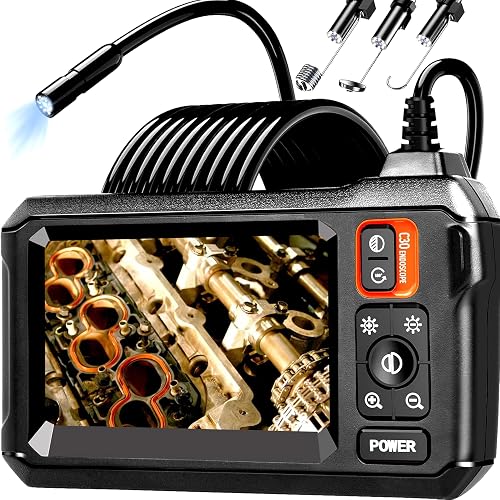
If any of these listings have you thinking seriously, these are the tools worth having before you go inspect a classic in person — or hire someone who has them.


Muscle Car Fan is not affiliated with any car dealers or listing sites linked in this article and earns no commission on vehicle sales. Links are provided for informational purposes only. Always verify current availability directly with the seller.
Which one on this list would you actually buy — and which would you pass on? If you are in the market for a 1970 Plymouth Barracuda right now, what is your number? Drop it in the comments. And if you know of a listing we missed, share the link — the community finds the best ones.


