
A muscle car owner’s guide to agreed value coverage, mileage caps, and which insurers actually understand what your classic is worth.
Ask any muscle car owner about insurance and you will usually get a story, not a policy number. It is the one about a standard auto insurer valuing a numbers-matching 1969 Camaro Z/28 at trade-in book value after a garage fire, leaving the owner four figures short of a car that had appreciated well past six figures over two decades of ownership. That is the trap: a policy written for a Honda Civic does not know the difference between a car and a Car, and it pays out accordingly. Classic car insurance exists specifically to close that gap, but the market is more crowded, and more different provider-to-provider, than most owners realize until they are actually filing a claim. Get the wrong mileage cap or skip the fine print on storage requirements, and you can end up technically insured but functionally uncovered the one time it matters most. We looked at where the specialists and near-specialists land for muscle car owners specifically — not generic classic car boilerplate — so you can pick a policy that actually protects what you built.
We looked at this specifically from a muscle car perspective — because the right answer is completely different than for a daily driver. Every provider we cover was evaluated on how well they actually understand these cars and the people who own them. Here is what the research found.
Heads up: Some links in this article are Amazon affiliate links. If you buy through them, we earn a small commission at no extra cost to you. We only recommend products with strong ratings and real buyer feedback.
As an Amazon Associate I earn from qualifying purchases.
What to Know Before You Shop
The single biggest thing separating classic car insurance from a standard auto policy is how the payout is calculated. A standard policy pays actual cash value (ACV) — what the insurer decides your car is worth on the day of a total loss, after depreciation and market swings get applied against you. An agreed value policy locks in a number you and the insurer agree on before anything happens, usually backed by documentation or an appraisal, and pays that full amount with no depreciation argument and no adjuster telling you the market disagrees. For a car that has appreciated well past its original sticker price — which describes most desirable muscle cars in 2026 — that difference can be tens of thousands of dollars at the worst possible moment.
The mistake we see most often is owners assuming a classic policy works like a regular one when it comes to how the car actually gets driven. Most classic and collector policies cap annual mileage somewhere between 2,500 and 7,500 miles, with 5,000 being the most common ceiling, and treat the car as a pleasure vehicle rather than daily transportation — no commuting, no errands, sometimes no driving to work under any circumstances. Exceed the cap or use the car outside its stated purpose and you risk a denied claim regardless of how minor the incident is. Insurers can also ask for proof of secured, enclosed storage at claim time, so if your policy requires a locked garage, keep it locked.
The tell that separates a real classic car specialist from a standard insurer with a “classic car endorsement” bolted on is how they talk about your car. A specialist asks about matching numbers, options, and documentation before quoting a number — a generalist asks your ZIP code and annual mileage and spits out a rate. If a provider cannot explain how they would value a car with a replaced engine or a well-documented restomod, that is a sign their “classic car coverage” is closer to standard coverage with a different name on it.
At a Glance
| Provider | Best For | Notable Feature | Cost Range |
|---|---|---|---|
| Hagerty | Broad accessibility, easy online quotes | Agreed value; some programs skip a fixed mileage cap | Get a quote — varies by car and garage |
| Grundy | Multi-car garages, price-conscious owners | MVP multi-vehicle agreed value + trip interruption | ~$345/yr+ (1967 Camaro example; varies) |
| American Collectors | Higher-mileage drivers | Up to 6% inflation guard + repair shop choice | Get a quote |
| Heacock Classic | Resto-mods, tribute and replica cars | Broadest eligibility for modified/replica classics | Get a quote |
Hagerty
Hagerty is the biggest name in this space for a reason, with a network built specifically around collector and enthusiast vehicles rather than treating classics as a side product. Agreed value coverage pays the full insured amount on a covered total loss with no depreciation deducted, and some comparison reporting puts Hagerty’s rates as much as 27% below standard auto policies for comparable coverage — though your actual quote depends on the car, garage, and driving history.
Where Hagerty stands out is flexibility on how the car gets used: some of its programs reportedly do not impose a hard annual mileage limit the way many competitors do, which matters if you actually drive your muscle car to shows and cruise nights rather than trailering it everywhere. It is also the easiest of the major names to get a quote from directly online.
What works well: Broad vehicle eligibility, agreed value as standard, flexible-to-no mileage caps on some programs, and a large enough footprint that claims adjusters generally know what they are looking at.
Watch out for: Because Hagerty writes so much volume, some owners report a more standardized claims process than a boutique specialist offers — fine for most claims, but worth knowing if you want one dedicated agent who knows your car by name.
Best for: Most muscle car owners with one or two collector vehicles who want a well-known name, agreed value coverage, and real flexibility to actually drive the car.
Grundy
Grundy has built its reputation on rate, and the research backs that up — one comparison cited a Grundy quote for a 1967 Camaro at roughly $345 a year, among the cheapest agreed-value quotes found for that car. Grundy’s MVP agreed-value policy lets owners with multiple classics combine them under one policy instead of juggling separate ones, worth asking about if your garage has more than one project.
The perks are where Grundy quietly earns its keep: up to $500 in spare parts coverage, trip interruption coverage worth up to $600 for hotel and repair costs if the car breaks down away from home, and up to $250 in towing and roadside assistance. None of that shows up in a basic rate comparison, but it matters the day your Chevelle’s fuel pump dies three states from home.
What works well: Strong pricing on agreed value coverage, a genuine multi-car MVP option, and trip interruption and spare parts perks most standard policies do not offer at all.
Watch out for: Grundy’s low headline rate is a starting point, not a guarantee — your actual price depends heavily on the specific car, its documented value, and your storage situation, so get a real quote before assuming you have found the cheapest option.
Best for: Owners with more than one classic who want to consolidate coverage, or anyone prioritizing price on an agreed value policy without giving up perks that matter for road trips and shows.
American Collectors Insurance
American Collectors also writes agreed value policies, and research consistently flags it for the most flexible mileage plans among the major players — useful if your muscle car sees more than the typical 5,000-mile-a-year allowance most competitors assume. It also offers an inflation guard of up to 6%, which automatically adjusts your agreed value over the policy term instead of leaving you to renegotiate every year as the market moves.
The free perks add up: basic towing, your choice of repair shop rather than an insurer-mandated one, and automatic coverage for a newly acquired vehicle during the policy term while you get it formally added. That last one matters if you tend to buy before you sell — it closes a coverage gap a lot of owners do not think about until they are in it.
What works well: Flexible mileage tiers, built-in inflation protection, repair shop choice, and a grace-period safety net for newly acquired vehicles.
Watch out for: As with any agreed value policy, the appraisal and documentation you provide up front determines your payout later — underdocument the car and you leave money on the table regardless of how good the policy terms are.
Best for: Owners who drive their classic more than average, want inflation protection built in, and do not want to be told which shop does the bodywork.
Heacock Classic
Heacock Classic earns its spot here specifically because of how wide it casts the net on what counts as a “classic” — hot rods, muscle cars, exotics, tribute and replica cars, and modern collector vehicles are all explicitly named as eligible, broader than several competitors that quietly narrow eligibility once you get past factory-original cars.
That matters for the segment of muscle car owners running a resto-mod, a tribute clone, or a genuine muscle car with a documented drivetrain swap — categories some mainstream classic insurers either decline outright or quote at a steep premium. Heacock’s positioning suggests it is built around exactly these edge cases rather than treating them as exceptions.
What works well: Broad eligibility for modified, tribute, and replica muscle cars that stricter insurers may decline or heavily upcharge.
Watch out for: Because Heacock leans into the enthusiast and modified end of the market, it is worth directly confirming how a specific modification — an engine swap, non-original bodywork — affects your agreed value before assuming standard terms apply.
Best for: Owners of resto-mods, tribute cars, or muscle cars with non-original drivetrains who have had trouble getting a straight answer, or a fair quote, from more conservative classic insurers.
Our Take
If you are asking us: start with Hagerty or American Collectors for a straightforward agreed value policy with real flexibility on mileage, and get a Grundy quote alongside it if price is the deciding factor — the multi-car MVP option alone is worth a phone call if you have more than one project in the garage. If your car does not fit the mold — a resto-mod, a tribute build, a genuine muscle car with a modified drivetrain — start with Heacock Classic instead of assuming a mainstream insurer will quote it fairly, or at all.
Gear That Goes With the Territory
While you are sorting out your coverage, here is the gear that belongs in any properly-protected muscle car garage — some insurers even ask about exactly this kind of thing when you apply.

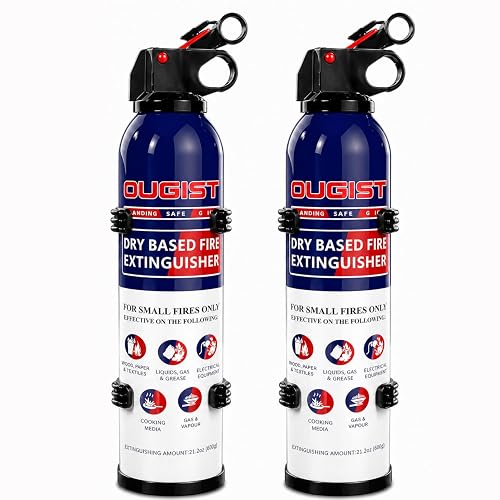
As an Amazon Associate, Muscle Car Fan earns from qualifying purchases. Prices shown are approximate and subject to change.
Who are you using for classic car insurance — and would you recommend them to someone with a numbers-matching car versus a driver? Drop your experience in the comments. The good, the bad, and the quote that made you say no.


