
A muscle-car-specific breakdown of J.J. Best Banc, Woodside Credit, LightStream, and local credit unions, so you know which lender actually understands agreed-value financing before you apply.
Walk into a regular bank with a numbers-matching 1970 Chevelle SS you want to finance and you’ll get one of two answers: a flat no, or a rate that makes the whole deal not worth doing. That’s not because your Chevelle is a bad asset — collector cars have held value better than plenty of traditional investments over the last decade — it’s because most banks aren’t built to underwrite a car older than the loan officer sitting across from you. The mistake we see constantly is guys shopping a classic car loan the exact same way they’d shop a Honda Civic loan, then getting blindsided by a 180-month term they didn’t ask for, a lender who suddenly wants the car garaged and covered under an agreed-value policy nobody mentioned up front, or a title snag because the car predates the VIN standards their system expects. Get the financing structure wrong and it isn’t just an inconvenience — it can mean a car that should’ve cost $400 a month actually running $650, or a deal falling apart at the title office three weeks after you thought it was locked in. This guide breaks down the lenders actually worth calling, what they really offer once you get past the homepage, and where the real gotchas hide.
We looked at this specifically from a muscle car perspective — because the right answer is completely different than for a daily driver. Every provider and option we cover was evaluated on how well they actually understand these cars and the people who own them. Here is what the research found.
Heads up: Some links in this article are Amazon affiliate links. If you buy through them, we earn a small commission at no extra cost to you. We only recommend products with strong ratings and real buyer feedback.
As an Amazon Associate I earn from qualifying purchases.
What to Know Before You Shop
The single biggest thing that separates classic car financing from a normal auto loan is that specialty lenders underwrite the car, not just your credit. Lenders define “classic” differently — some set the cutoff at 25 years old, others (like Collector Car Lending) draw the line at cars built between 1928 and 1998 — and most want the car in already-running, non-project condition before they’ll touch it. Worth keeping in perspective: fewer than 3% of the roughly one million cars Hagerty insures were purchased with financing at all, which tells you how heavily this hobby still runs on cash buyers. That’s useful context if a lender’s terms feel unusually strict — they’re underwriting a far smaller, far pickier market than a normal car-loan department is used to.
The most common expensive mistake is assuming the advertised rate is the rate you’ll actually get. Most specialty lenders want a credit score of 700 or higher, some require 750+, and down payments typically run 10% to 30% depending on the car’s value and rarity. J.J. Best Banc’s stated starting APR sits around 7%, but that’s a floor, not an average — and Woodside Credit doesn’t publish a clear APR range up front at all, so get the real pre-approval number before you get attached to a car. Also check for prepayment penalties and balloon payments before you sign anything; Woodside, for example, advertises secured loans with neither, which is a real point in its favor over lenders that quietly build one in.
The tell that separates a lender who actually understands muscle cars from one that’s repurposed a standard auto loan product: ask how they value the car for the loan. A real specialty lender will talk about agreed value, comparable sales, and documentation like build sheets or Marti Reports for classic Fords — not just pull a number off a mainstream valuation tool built for daily drivers. If the person on the phone can’t explain how they landed on your car’s loan value, that’s the signal to keep shopping.
At a Glance
| Provider | Best For | Notable Feature | Cost Range |
|---|---|---|---|
| J.J. Best Banc & Co. | Fastest payoff, widest track record | Up to 84-mo terms, $6K-$1M+ loans | ~7%+ APR, get a quote |
| Woodside Credit | Lowest monthly payment | Up to 180-mo terms, no prepay penalty | ~10% avg APR, get a quote |
| LightStream (Truist) | Speed and simplicity, sub-$100K | Same-day funding, up to 100% financed | Rate tied to personal credit |
| Local Credit Unions | Lowest rate if you qualify | Rates seen as low as 4.49%-5.49% APR | Varies by credit union |
J.J. Best Banc & Co.
J.J. Best Banc bills itself as the oldest and largest classic and collector car lender in the country, financing everything from Brass Era cars to 2000s-era muscle and sports cars, with loan amounts reportedly running from around $6,000 up into seven figures. It’s the name most muscle car owners recognize first, and that track record shows in how the process runs — a straightforward application built specifically around collector vehicles rather than a generic auto-loan form with “classic car” bolted on as an afterthought.
Where J.J. Best differs most from Woodside is loan term: its maximum stretches to 84 months, versus Woodside’s 180. That’s shorter payments over a shorter runway, which some owners actually prefer since it means less total interest paid and a car that’s paid off sooner rather than financed for a decade and a half.
What works well: Long-standing specialty lender with deep experience specifically in collector and classic vehicles, not a general auto lender doing collector cars as a side product; starting APR around 7% for well-qualified buyers; wide loan range from modest project cars to seven-figure collector pieces.
Watch out for: The 84-month term cap means a bigger monthly payment than Woodside on the same loan amount; down payment requirements run 10-30% and lean toward the higher end for less common or higher-value cars.
Best for: Owners who want the shortest path to owning the car outright and are comfortable with a higher monthly payment in exchange for paying less interest over the life of the loan.
Woodside Credit
Woodside Credit is Barrett-Jackson’s exclusive financing partner and markets itself around a “lowest payments in America” pitch, largely because of how far it stretches loan terms — up to 180 months, or 15 years, on collector vehicles valued up to $1,000,000. For a numbers-matching muscle car that’s likely to hold or gain value, a longer term with a smaller monthly hit is an attractive way to keep cash free for the restoration budget instead of tying it all up in payments.
Woodside also advertises secured auto loans with no prepayment penalties and no balloon payments, and offers pre-approval for buyers with strong credit and a track record of prior classic car ownership. The tradeoff: Woodside doesn’t clearly publish its APR range, with research pegging the real-world average closer to 10%, so the “lowest payments” pitch is really about term length, not necessarily the lowest rate on the market.
What works well: Longest terms in the specialty-lending space (up to 180 months), no prepayment penalty or balloon payment, official Barrett-Jackson auction financing partner with experience valuing auction-bought muscle cars specifically.
Watch out for: APR isn’t published up front — you won’t know your real rate until you’re deep into the pre-approval process, and a 15-year term means significantly more total interest paid than a shorter loan even at a similar rate.
Best for: Buyers who want the lowest possible monthly payment on a higher-value car and plan to keep cash available for restoration or a second project, rather than paying the car off fast.
LightStream (Truist)
LightStream is the odd one out on this list — it’s not a classic-car specialty lender, it’s Truist’s online unsecured personal loan brand, and it works for classic car purchases because it doesn’t care what you’re buying. If your loan need is under $100,000, LightStream can be a genuinely smart option: funding can land same-day, and depending on the loan you can finance up to 100% of the purchase price with no specialty appraisal process to wait on.
The catch is exactly what you’d expect from an unsecured personal loan: because LightStream isn’t evaluating the car itself, there’s no agreed-value underwriting built into the loan the way there is with Woodside or J.J. Best. You’re borrowing against your own credit profile, not the car’s value, which matters if you’re financing something that could appreciate significantly.
What works well: Fast, often same-day funding; can finance up to 100% of the purchase price on qualifying loans; simple online process without a specialty vehicle-valuation step slowing things down.
Watch out for: No agreed-value structure since it’s not evaluating the car as collateral; best suited to loans under $100,000, so it’s not the right fit for a six-figure collector purchase; rate depends entirely on your personal credit, not the car.
Best for: Buyers with strong personal credit financing a sub-$100,000 driver-quality muscle car who want speed and simplicity over specialty underwriting.
Local Credit Unions
Don’t skip your own credit union before calling a specialty lender — some regional credit unions are quietly offering the best rates on this list. Research turned up examples like Star One Credit Union advertising a flat 5.49% APR and DuPage Credit Union offering rates as low as 4.49% on shorter terms, both well under the roughly 7-10% starting range from the specialty lenders above. The catch is availability: these rates and terms vary heavily by credit union, membership eligibility rules apply, and most won’t stretch to the 15-year terms or seven-figure loan amounts a dedicated collector-car lender can offer.
What works well: Meaningfully lower APRs than specialty lenders in many cases; member-focused service with a real person on the phone; no “collector car” markup to navigate.
Watch out for: Membership eligibility requirements; shorter maximum terms than Woodside or J.J. Best; loan officers may still be less familiar with agreed-value classic car underwriting than a dedicated specialty lender, so ask the valuation question directly.
Best for: Owners with an existing credit union relationship financing a moderately priced driver-quality classic who want the lowest possible rate and don’t need a 15-year term.
Our Take
If you’re asking us, start with your own credit union first — the rate gap is real and it costs nothing to ask. If that doesn’t pan out, Woodside Credit is where most muscle car owners land for anything mid-five-figures and up, purely because the longer term keeps the payment manageable while you’re also budgeting for insurance, storage, and the inevitable parts bill. J.J. Best is the better call if you’d rather pay more per month and own the car outright sooner.
Gear That Goes With the Territory
While you’re sorting out financing, here’s what experienced classic car owners keep in the garage for prepping and protecting a new-to-them muscle car once the deal closes.
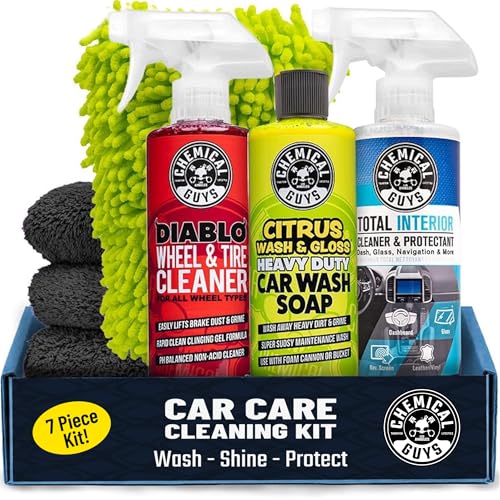


As an Amazon Associate, Muscle Car Fan earns from qualifying purchases. Prices shown are approximate and subject to change.
Who did you finance your muscle car through — and would you use them again? Drop your experience in the comments. The good, the bad, and the rate that made you say no.


