
We found 8 1969 Corvette Stingray listings across ClassicCars.com, a Michigan dealer, and eBay — here’s what’s available right now and what the market looks like.
The 1969 Corvette Stingray sits in a strange spot in the C3 hierarchy — it’s the last year of the chrome-bumper big-block era before emissions rules started strangling horsepower, and it’s the year Chevy briefly tried “Stingray” as one word before going back to two, which is exactly the kind of trivia that makes NCRS judges argue at car shows. What makes it worth hunting for right now is the spread: this is a car you can buy as a $18,000 unfinished project or a $125,000 numbers-matching survivor, and both ends of that range are legitimate 1969 Corvettes, not different cars wearing the same badge. The market on these has been steady rather than hot over the last year — small-block driver-quality coupes haven’t moved much, while documented big-block cars with real paperwork keep climbing, which tells you where the smart money in this segment is actually going. What surprised me digging through this month’s listings is how many sellers are leaning hard on “numbers matching” as a selling point even on cars with replaced engines or non-original paint, so that phrase is worth reading closely rather than taking at face value. If you’ve been circling a ’69 Vette and waiting for the right one to show up, this is a good month to actually look — there’s real variety out there right now, from a family project car in Ohio to a Top Flight-award survivor in Pennsylvania.
This month’s search turned up 8 listings spanning ClassicCars.com, a Michigan dealer, and a live eBay auction, with asking prices running from $18,000 up to $125,000. The ClassicCars.com search was the deepest well, turning up six private-party and dealer listings on its own, which says something about how much of this market still runs through classifieds rather than auction houses. The standout is an unrestored, numbers-matching 1969 L36 427 coupe with just 24,000 miles and a 2024 NCRS Top Flight award, offered by a Pennsylvania dealer — the kind of survivor that almost never comes up for sale outside of major auctions. On the other end, there’s a Lorain, Ohio family car listed by someone selling their late father’s unfinished project for $18,000, which is about as honest a listing as you’ll find in this price range.
Current 1969 Corvette Stingray Listings
These come from ClassicCars.com, a Michigan-based specialty dealer, and a live eBay auction — spanning private sellers, a dealer, and one online bidding war.
As an Amazon Associate I earn from qualifying purchases.
1969 Chevrolet Corvette Stingray Coupe — $125,000 (OBO)
Can-Am White • 24,000 miles • ClassicCars.com (Dealer)
Unrestored, numbers-matching L36 427 Turbo-Jet coupe with a 2024 NCRS Top Flight award and extensive original documentation — the kind of untouched survivor that rarely surfaces outside major auctions. Priced accordingly, but the paperwork backs it up.
1969 Chevrolet Corvette Stingray Convertible — $115,000
Daytona Yellow • ~2,700 miles • ClassicCars.com (Private Seller)
A frame-off restored, numbers-matching 427/435hp convertible with a 4-speed and side pipes. The seller notes wire-transfer-only payment terms, which is worth building into your due diligence before you get serious.
1969 Chevrolet Corvette Stingray Coupe (L71) — $80,000 CAD (~$56,000 USD)
River Side Gold • ~2,100 miles • ClassicCars.com (Private Seller)
L71-spec 427 with three two-barrel carbs, rated 435hp, though the seller’s own listing notes it’s a repaint from 20 years ago and the manual has since been upgraded to a modern Tremec TKO 600 — so treat “numbers matching” here as referring to the drivetrain casting, not a time-capsule original.
1969 Chevrolet Corvette Stingray T-Top Coupe — $66,000 (OBO)
Cortez Silver • 48,083 miles • ClassicCars.com (Private Seller)
Tri-power 427/400hp with a 4-speed, black-on-black interior, and a seller claim of being 1 of 209 built to this spec (unverified, but plausible for the drivetrain combo). Stored in heated storage for 11 years, which matters more for a car this far north.
1969 Chevrolet Corvette Stingray Convertible — $54,000 (OBO)
Candy Wineberry (custom repaint) • ClassicCars.com (Private Seller)
Numbers-matching L46 350/350hp with a restomod-flavored custom paint job over the original color. The seller’s own description leans heavily on nostalgia copy about 1969 pop culture — read past it to the actual mechanical claims (new brakes, exhaust, posi) before deciding if the paint upcharge is worth it to you.
1969 Chevrolet Corvette Convertible (427 Big-Block) — Call for Price
Red • Vanguard Motor Sales, Michigan (Dealer)
A GM 427ci big-block convertible with a Muncie 4-speed, posi rear, and four-wheel disc brakes, garage-kept by its prior owner for over a decade. The dealer’s listing goes deep on casting numbers and date codes but doesn’t post a price online — you’ll need to call.
1969 Chevrolet Corvette (454 V8) — Auction — bid $16,000, BIN $18,000
Black • 32,500 miles • eBay Motors
Red flag: this one carries a salvage title, which the listing discloses up front. That’s not automatically disqualifying on a car this age, but it means a pre-purchase inspection and a hard look at what caused the branding are non-negotiable before you bid. Reserve was not yet met as of this writing.
1969 Chevrolet Corvette Stingray Coupe — $18,000 (OBO)
Red • 12,522 miles • ClassicCars.com (Private Seller)
The most honest listing in this roundup: a family car the seller’s late father never got to finish restoring. Per the appraisal quoted in the listing, it “runs and drives but shows its age” across the engine bay, interior, chassis, and exterior. This is a project car priced like one, not a bargain-dressed-up survivor.
What the Market Is Telling Us
The spread in this month’s search — $18,000 to $125,000 — comes down almost entirely to originality and documentation rather than raw condition. The Pennsylvania coupe at $125,000 isn’t the fastest or flashiest car on this list, but it’s unrestored with matching numbers and NCRS paperwork, and that combination is what actually moves the needle on a C3. Compare that to the Toronto car at a similar power level (L71-spec 427) sitting at roughly half the price specifically because it’s been repainted and had its transmission swapped — the engine spec is nearly identical, but one car is a time capsule and the other is a well-sorted driver.
A realistic budget for a driver-quality small-block ’69 right now looks like $50,000-$70,000 — enough to get a numbers-matching or numbers-adjacent car with usable paint and an interior that doesn’t need immediate work, but not enough to demand a Top Flight-caliber survivor. At the low end, $18,000-$25,000 buys you a genuine project, and buyers need to go in clear-eyed that “shows its age” in a seller’s own words means real money in bodywork and mechanicals before the car is drivable, let alone show-ready. At the top, six-figure asking prices are increasingly reserved for cars with a documented paper trail, not just a good-sounding story.
Supply looks reasonably steady for this model right now — six of this month’s eight listings came from a single classifieds search, which suggests private sellers still outnumber auction consignments for garden-variety ’69s. A patient buyer shopping the $40,000-$60,000 range has real selection to work with; someone chasing a documented big-block survivor at the top end will likely wait longer and pay a premium when the right car finally surfaces.
What to Check Before You Buy
The 1969 Corvette’s steel “birdcage” — the structural frame under the fiberglass body that holds the windshield posts and door hinges — is the single most expensive thing that can go wrong on this car, and forum members on CorvetteForum consistently flag the same failure points: the windshield frame’s lower corners and A-pillars, the body-mount cages and bolts behind the seats, and the birdcage section just ahead of the rear wheels, visible through the small access hatch in the wheel well. None of these show up in a quick walk-around; a magnet and a flashlight aimed into those specific spots is the only honest way to check before you buy.
On the frame itself, forum members report the worst corrosion collects right in front of the rear wheels, where road salt and debris pool at the trailing-arm pickup points, along with the rocker channels and the #4 body mount — areas that act as a catch-all for standing water on a car this age. Mechanically, the small-block L46 and L36/L71 big-blocks in this batch of listings are well-documented engines with parts support that’s still strong, but a numbers-matching claim is only as good as the casting-date and VIN-stamp cross-check — don’t take a seller’s word for it on a car priced in the six figures.
For paperwork, verify the VIN stamp on the frame near the steering column matches the door tag and title before anything else. Numbers-matching adds real resale value on documented big-block cars like the Pennsylvania survivor in this list, but on a small-block driver you’re planning to enjoy rather than flip, paying a steep premium for matching numbers over a well-sorted non-matching example is often the less rational financial move.
Gear to Bring When You Go Look at It
If any of these listings have you thinking seriously, these are the tools worth having before you go inspect a classic in person — or hire someone who has them.

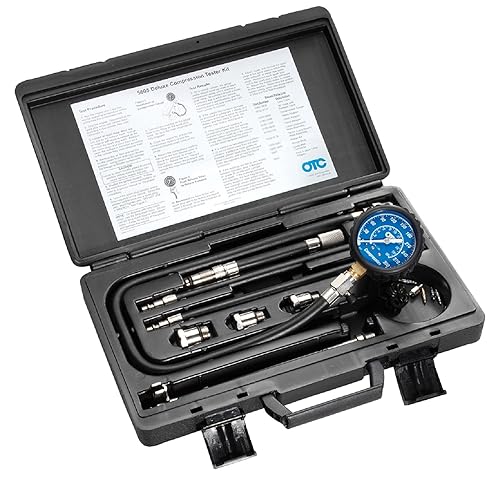

Muscle Car Fan is not affiliated with any car dealers or listing sites linked in this article and earns no commission on vehicle sales. Links are provided for informational purposes only. Always verify current availability directly with the seller.
Which one on this list would you actually buy — and which would you pass on? If you are in the market for a 1969 Corvette Stingray right now, what is your number? Drop it in the comments. And if you know of a listing we missed, share the link — the community finds the best ones.
Related posts:
 1969 Pontiac Firebird Trans Am for Sale Right Now: 6 Listings Worth a Look (August 2026)
 1967 Shelby GT500 for Sale Right Now: 13 Listings Worth a Look (August 2026)
 1970 Ford Torino Cobra for Sale: What’s Available Right Now (August 2026)
 1968 Chevelle SS396 for Sale: What’s Available Right Now (September 2026)
 1969 Boss 302 for Sale: What’s Available Right Now (September 2026)
 1970 Boss 429 Mustang for Sale: What’s Available Right Now (September 2026)
 1970 Plymouth Road Runner for Sale Right Now: 11 Listings Worth a Look (September 2026)
 1970 Dodge Super Bee for Sale Right Now: 7 Listings Worth a Look (September 2026)
 1969 Ford Mustang Mach 1 for Sale Right Now: 12 Listings Worth a Look (October 2026)
 1967 Pontiac GTO for Sale: 12 Listings Available Right Now (October 2026)


