
We found 7 1970 Dodge Super Bee listings across ClassicCars.com, Streetside Classics, and Silverstone Motorcars — here’s what’s available right now and what the market looks like.
The 1970 Super Bee is the one year Dodge’s budget muscle car actually looked like it meant it — the loop-style front bumper and split grille only lasted a single model year, which is exactly why serious Mopar guys hunt this specific year over the ’68-’69 cars. Values have cooled noticeably from the 2022-2023 peak, when six-pack and Hemi cars were trading well into six figures at auction, but the everyday 383 cars have settled into a range that’s actually approachable again for a driver-quality example. What surprised us running this search is how thin the current inventory is — dealers who normally carry two or three Super Bees at a time are down to one, and several of the listings that showed up in our first pass had already sold or been pulled by the time we went back to verify them. That tells you something about where demand sits right now even as headline auction numbers soften. If you’ve been circling this model waiting for the right moment, the cars below are worth a serious look before the next batch disappears.
We found 7 verified listings still active this month, spanning from a $24,500 V-code 440 six-pack project car in Texas up to a $82,995 restomod build at Streetside Classics in Fort Worth. It’s a thinner market than we’d like to report — several listings we located in our first search had already sold by the time we re-verified them a few hours later, including one dealer’s flagship car that had been asking nearly $180,000. The standout of what’s left is a numbers-matching 383 with a Hurst pistol-grip 4-speed out of Cadillac, Michigan at $62,995, plus a genuinely well-documented Plum Crazy 440 Magnum car in Pittsburgh. If you’re set on a numbers-matching, largely original example rather than a resto-mod, this is a market where patience and a fast phone call both matter.
Watch: Vanguard Motor Sales Walks Through a 1970 Dodge Coronet Super Bee
Vanguard Motor Sales runs one of the larger classic-car showrooms in the Midwest, based out of Plymouth, Michigan, and their YouTube channel has become one of the more reliable stops for walkaround and test-drive videos on B-body Mopars specifically. In this one, a member of their sales team takes a 1970 Dodge Coronet Super Bee out for an actual test drive rather than just a static walkaround, which gives you a better sense of how the car runs and sounds than most dealer clips. Note that inventory at a shop this size moves fast — this specific car may already be sold, so treat the video as a good look at what a well-presented example looks and drives like, and check Vanguard’s current inventory directly if you want to know what they have on the lot today.
As an Amazon Associate I earn from qualifying purchases.
Car shown in this video:
- 1970 Dodge Coronet Super Bee — dealer-prepped example, test-driven on camera by Vanguard’s sales team
More 1970 Dodge Super Bee Listings Available Now
These come from ClassicCars.com’s dealer and private-seller network as well as Streetside Classics and Silverstone Motorcars, cross-checked for live status the same day this article was published.
1970 Dodge Super Bee — $82,995
Automatic • ~1,000 miles • Streetside Classics (Fort Worth, TX)
A heavily built restomod rather than an original-spec car — if you want a Super Bee that drives like a modern car, this is the one on the list, but don’t expect numbers-matching value out of it down the road.
1970 Dodge Super Bee — $77,995
Manual • ~1,000 miles • Streetside Classics (Mesa, AZ)
Listed as original and highly original rather than a resto-mod — if the low odometer reading holds up under inspection, this is the closest thing on this list to a time-capsule car, and the price reflects that.
1970 Dodge Super Bee — $69,500
Automatic • 149 miles shown • Silverstone Motorcars (Peabody, MA)
Marked as a modified build with period-correct styling rather than a bone-stock car — the near-zero mileage figure almost certainly reflects miles since a recent build or restoration rather than true lifetime mileage, so ask for the full history before assuming it’s a fresh car.
1970 Dodge Super Bee — $64,000
Plum Crazy • Private Seller (Pittsburgh, PA)
A beautifully restored 440 Magnum 4-barrel car in factory-correct Plum Crazy — the seller’s description is short on details like mileage and build sheet documentation, so push for that before wiring a deposit on a car this far from home.
1970 Dodge Super Bee — $62,995
383 4-Speed • Priority Seller (Cadillac, MI)
The pick of this batch if documentation matters to you: seller states all-numbers-matching with the Ram Charger hood and a Hurst pistol-grip 4-speed. No power steering means it drives like a 1970 muscle car should — heavy at parking-lot speeds, which some buyers will actually prefer.
1970 Dodge Super Bee — $47,500
Bright Red (FE5) • Great Lakes Classic Cars (Hilton, NY)
Marketed by the dealer as a “real” WM23 Super Bee — worth confirming what documentation backs that claim before paying a premium for it, since “real” in dealer copy isn’t the same as a Galen’s Registry report or broadcast sheet in hand.
1970 Dodge Super Bee — $24,500
V-Code 440 Six Pack • 727 Automatic • Private Seller (Celeste, TX)
The value play on this list, and the reason the price is this low: it’s a genuine 440 six-pack car, originally cream with a tan interior, but the listing reads like a project rather than a driver. Budget for real work, not just a detail and a tune-up.
What the Market Is Telling Us
The spread we found this month runs from $24,500 for a needs-work 440 six-pack project up to $82,995 for a fully built restomod, with the bulk of clean, drivable examples clustering between $47,500 and $70,000. What separates the top and bottom of that range isn’t just condition — it’s documentation and drivetrain. A numbers-matching car with a build sheet or Galen’s Registry report, like the Cadillac 383 4-speed, commands a real premium over a car where the seller can’t say for certain the engine is original, even when both look equally clean in photos.
A realistic budget for a solid, numbers-matching driver right now sits in the $55,000-$70,000 range — enough to get a car with the correct engine and honest paint, but not a concours restoration. Below that, in the $25,000-$45,000 range, expect to be buying a project: cars needing paint, interior work, or mechanical sorting, like the Celeste, Texas six-pack car. Auction results we’ve tracked this year (a $181,500 Barrett-Jackson sale for a heavily built example in September, against a $20,500 Bring a Trailer result for a rougher car in July) show just how wide the spread gets once you factor in build quality and provenance — the private-sale asking prices in this article sit comfortably inside that same range.
Supply is genuinely tight right now — several listings we found in our first pass of research had already sold or been pulled by the dealer within the same week, including a flagship Vanguard car that had been asking close to $180,000. For a buyer who has done their homework on what “numbers-matching” actually needs to look like on paper, this is a market that rewards moving quickly on the right car rather than waiting for prices to soften further.
What to Check Before You Buy
The B-body Mopar unibody has well-known rust patterns, and the 1970 Super Bee is no exception: check the trunk floor pans and the area around the rear frame rails where they meet the trunk drop-offs, the torsion bar crossmember mounting points under the front floor, the lower quarter panels just ahead of the rear wheel openings, and the cowl area at the base of the windshield where water collects. Forum members on sites like B-Bodies Only and Moparts consistently flag the front floor pans under the carpet and the trunk drop-offs as the two spots that get patched cheaply and painted over rather than properly repaired — bring a magnet and check both before you get attached to a car.
On the mechanical side, 383 and 440 Magnum engines are generally reliable but the factory Carter and Holley carburetors on unrestored examples often have worn needle valves that cause a rough, surging idle — listen for that on a test drive, since it’s a quick fix if caught early but gets blamed on “bad gas” for years if ignored. The 727 TorqueFlite automatic is famously tough, but a whining rear axle on deceleration usually means a tired pinion bearing in the 8.75-inch rear end, which is a straightforward repair but not a free one. Parts availability for trim pieces specific to the 1970-only front clip — the loop bumper and split grille — is tighter than for 1968-69 Super Bees, so a car missing trim pieces can get expensive to finish correctly.
VIN tags on these cars stamp the body style, engine code, and assembly plant, and it’s worth cross-referencing the fender tag against the VIN before paying a numbers-matching premium — a mismatched broadcast sheet or repainted tag is the first thing a Mopar-savvy inspector will look for. That said, if you’re planning to drive and enjoy the car rather than show it or flip it, a well-documented non-numbers-matching example with a correct-type engine is often the smarter buy — you’ll pay 20-30% less and drive it exactly the same.
Gear to Bring When You Go Look at It
If any of these listings have you thinking seriously, these are the tools worth having before you go inspect a classic in person — or hire someone who has them.
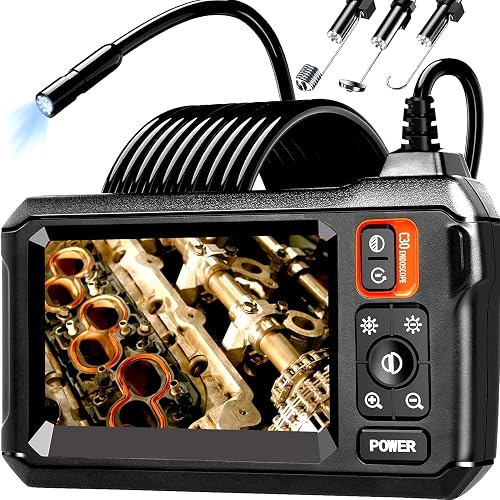

Muscle Car Fan is not affiliated with any car dealers or listing sites linked in this article and earns no commission on vehicle sales. Links are provided for informational purposes only. Always verify current availability directly with the seller.
Which one on this list would you actually buy — and which would you pass on? If you are in the market for a 1970 Dodge Super Bee right now, what is your number? Drop it in the comments. And if you know of a listing we missed, share the link — the community finds the best ones.
Related posts:
 1969 Pontiac Firebird Trans Am for Sale Right Now: 6 Listings Worth a Look (August 2026)
 1967 Shelby GT500 for Sale Right Now: 13 Listings Worth a Look (August 2026)
 1970 Ford Torino Cobra for Sale: What’s Available Right Now (August 2026)
 1968 Chevelle SS396 for Sale: What’s Available Right Now (September 2026)
 1969 Boss 302 for Sale: What’s Available Right Now (September 2026)
 1970 Boss 429 Mustang for Sale: What’s Available Right Now (September 2026)
 1970 Plymouth Road Runner for Sale Right Now: 11 Listings Worth a Look (September 2026)
 1969 Corvette Stingray for Sale: What’s Available Right Now (September 2026)
 1969 Ford Mustang Mach 1 for Sale Right Now: 12 Listings Worth a Look (October 2026)
 1967 Pontiac GTO for Sale: 12 Listings Available Right Now (October 2026)


